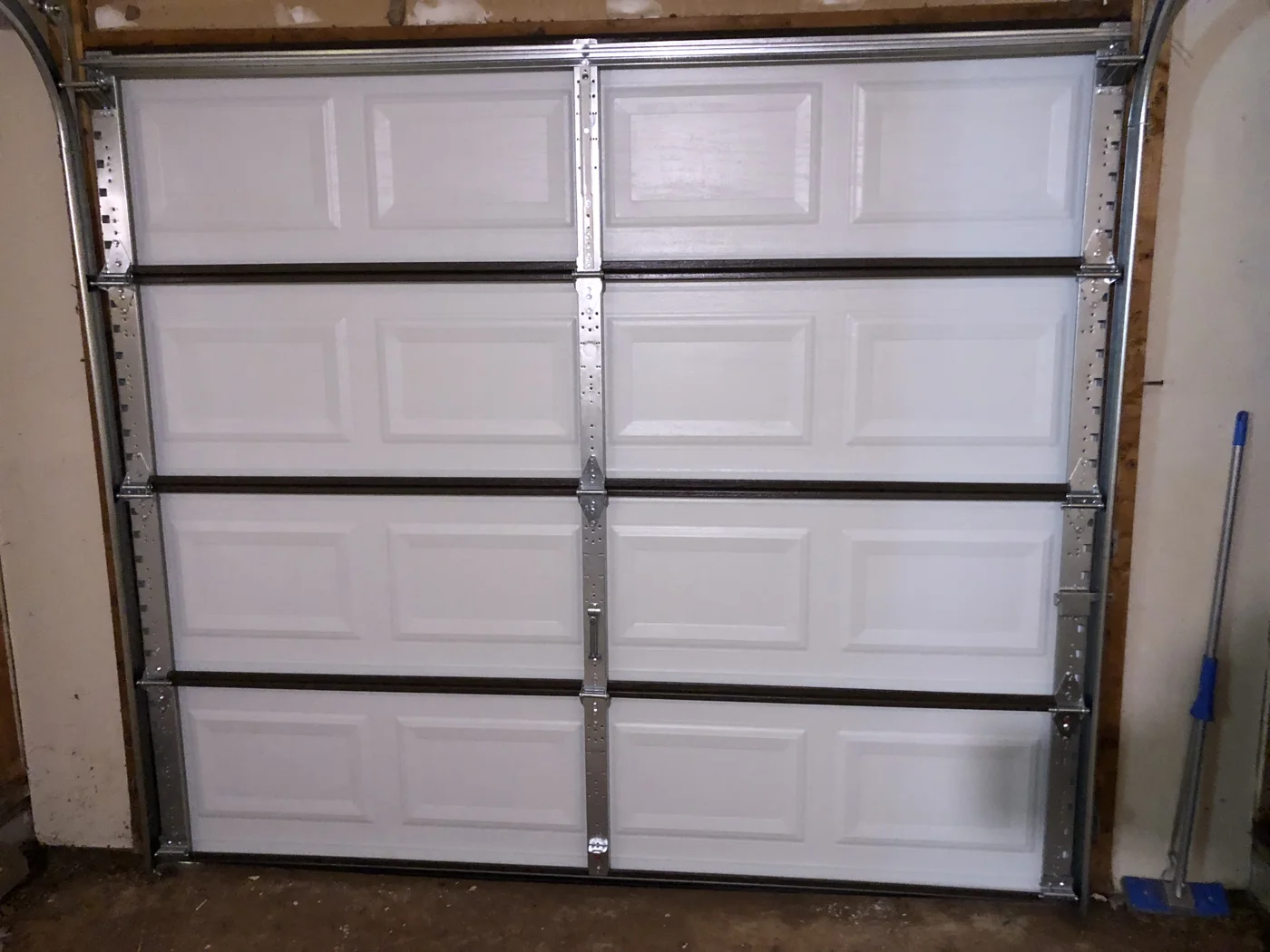

A draft or a visible gap may send you looking for “garage door rubber.” Before buying, identify which barrier is involved and ask whether replacing it will address the actual problem. A product with the right length can still be the wrong replacement.
This is an identification and purchasing guide. It does not include a procedure for opening, supporting, or dismantling a door.
Distinguish the three locations
Clopay describes a bottom seal attached to the door’s lower edge, a threshold attached to the floor, and perimeter weatherstripping around the sides and top of the opening. They occupy different locations and should not be treated as interchangeable products.
Start by telling the supplier where you see the issue: along the bottom, at a side, across the top, or at the floor threshold. Photograph the area from a safe position if possible.
Avoid assuming that adding another barrier is the answer. Ask an installer whether the existing door position, seal, floor condition, or another issue needs assessment.
Identify the attachment before the material
Clopay’s guide illustrates different bottom-seal profiles, including T-style and bead-style attachments. The replacement must be confirmed for the existing system or a specifically proposed replacement assembly.
Ask the supplier which details it needs to identify the attachment. Use existing documentation and safe photographs first. Do not remove the bottom hardware or move the door into an unsafe position to expose a cross-section.
If a close inspection is necessary, ask a service provider to collect the information. A speculative purchase may cost more time than identifying the part correctly.
Give the supplier an organized description
Prepare the door manufacturer and model if known, the location of the problem, the current material’s visible condition, and any available original part number. Label dimensions as measured, estimated, or not yet confirmed.
Use this request:
“Please identify a replacement for this door and existing seal attachment. Tell me which dimensions you need, whether you are quoting only the flexible insert or a complete assembly, and what installation work is required.”
Keep the response with the quote. Do not treat a seller’s generic “fits most doors” description as confirmation for your specific installation.
Discuss the problem you want solved
Describe whether your concern is a damaged strip, daylight, debris, or water. Explain when you notice it. Do not promise yourself that new weatherstripping will resolve every water-entry or comfort issue.
Ask the installer to distinguish replacing a worn component from correcting another condition. Request an explanation of what the proposed work is expected to accomplish and its limitations.
This guide does not supply a leakage rating, energy-savings estimate, or guarantee that a larger seal will close an irregular gap.
Compare the whole quote
Confirm the product identity, quantity, included components, installation labor, disposal, and warranty. If the proposal includes a floor threshold as well as a door seal, ask why each is being recommended.
Check who handles a callback if the concern remains after the work. Keep before-and-after observations with the invoice rather than relying only on a product label.
Questions before purchase
Does a longer strip establish that it fits? No. Confirm the attachment and complete product specification as well.
Should I replace the retainer too? Ask the installer to explain its condition and the proposed scope. This page does not diagnose it.
Can I compensate for a door problem with thicker material? Request an assessment rather than using a different seal as an improvised mechanical adjustment.
When should I seek service? If identification requires dismantling hardware, moving a questionable door, or working near tensioned components, arrange professional help.
Sources & further reading
Sources provide technical background. Worksheets and comparison questions are editorial guidance, not an equipment diagnosis.
Keep reading
Looking for local context?
Explore the NJ and PA area guides for nearby-place references and questions to confirm with a provider. Business coverage and Google Maps links are added only after verification.