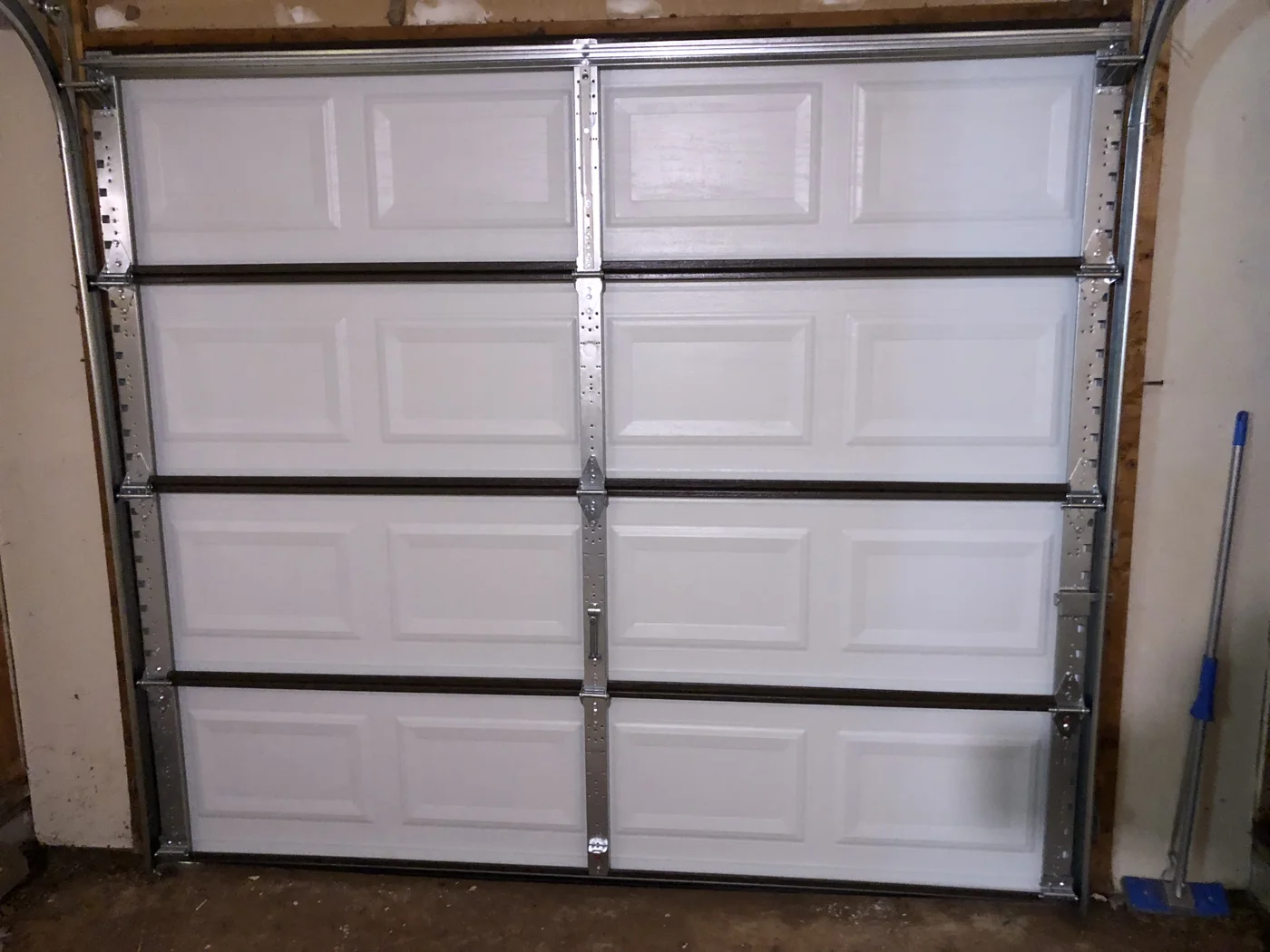

The first step in buying a replacement is identifying the equipment, not finding a photograph that looks close. Separate three questions: What do I own? What failed? Which replacement has been confirmed for that equipment?
You may be able to assemble the paperwork yourself. Diagnosis and installation may still require a trained technician. A parts listing is not permission to dismantle the door.
Begin with the original equipment record
Look for an existing invoice, manual, manufacturer label photograph, or prior service record. Write the door and opener information separately. Keep punctuation, suffixes, and letters exactly as shown.
An equipment name copied from an advertisement is not necessarily the model installed in your garage. If a label cannot be read from a safe location, mark the field as unconfirmed and ask a technician to identify it.
Do not publish serial numbers, access codes, or photographs showing keypad codes in a public review or directory submission. Share information privately with the supplier when needed.
Describe the item without removing it
Use ordinary descriptions first: flexible strip at the bottom, handheld remote, or damaged door section. Supply a photograph only if you can take it without touching the mechanism or standing in an unsafe position.
Clopay’s replacement-parts guide distinguishes weather seal, track, and hinges and directs certain repairs to professionals. Similar-looking hardware should not be treated as interchangeable.
Ask a supplier to provide the correct part name and number. A clear identification is worth more than a confident guess based on an online image.
Confirm the failure before placing the order
Tell the supplier whether a technician diagnosed the part or you suspect it because of a symptom. For example, “the remote does not operate the opener” is not the same statement as “this remote has been confirmed faulty.”
Ask whether further diagnosis is needed and whether the proposed replacement addresses the reported problem. If the answer depends on inspecting the system, arrange that inspection before buying a nonreturnable component.
Do not order springs, cables, brackets, or structural hardware based on appearance. This guide gives no sizing or replacement procedure for those components.
Request compatibility in writing
Use this supplier message:
“I have equipment identified as [manufacturer and exact model]. I am considering [seller’s exact part number]. Please confirm the documented compatibility, any required companion components, and whether professional installation is needed. The fault is [confirmed diagnosis or clearly labeled observation].”
Keep the reply with the product description. If the original number has been replaced by another, request documentation connecting the two.
DASMA cautions that its technical data sheets do not replace manufacturer instructions. Use the equipment manufacturer’s documentation for model-specific requirements.
Check what is actually supplied
Before checkout, confirm quantity, product condition, included hardware, instructions, warranty, and return restrictions. Ask whether the seller is quoting a single item or a kit. Record the exact seller and order number.
On arrival, compare the package labeling with your order before installation. Contact the seller about discrepancies rather than modifying a part to make it fit.
Keep the installation decision separate
Some purchasing questions can be resolved through paperwork, while installation requires work around moving or tensioned equipment. Ask who will install the item and whether that person accepts customer-supplied parts.
Can a photograph prove compatibility? It can help identify a question, but obtain a documented match for the equipment.
What if the model is unknown? Have it identified instead of ordering a speculative replacement.
Does this directory guarantee product fit? No. Each purchase requires confirmation from the appropriate manufacturer or supplier.
Sources & further reading
Sources provide technical background. Worksheets and comparison questions are editorial guidance, not an equipment diagnosis.
Keep reading
Looking for local context?
Explore the NJ and PA area guides for nearby-place references and questions to confirm with a provider. Business coverage and Google Maps links are added only after verification.