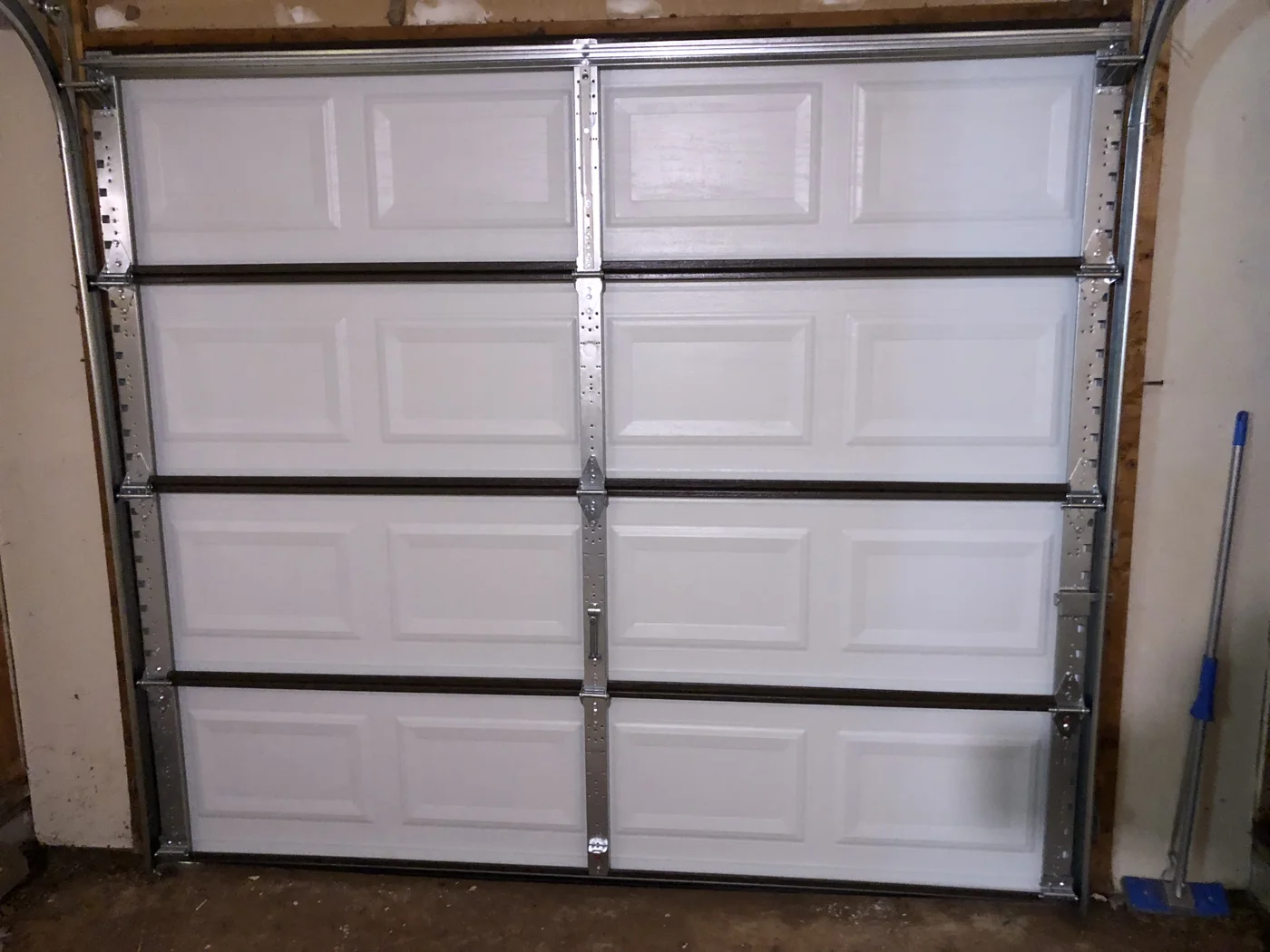

“Track repair” may refer to several different findings. The useful first step is to understand which component the technician has identified and how it relates to the reported fault.
Do not loosen a bracket, move a roller, or bend a track to identify the part. Damaged door equipment needs a trained technician's assessment.
Understand the terms used in the proposal
A track guides the rollers during door travel. Rollers, brackets, and hinges are distinct components; a description such as “the wheel came out” does not identify which replacement or adjustment is required.
Clopay's parts guidance directs track issues and certain hardware replacements to professionals. Ask the provider to point out the component safely and record its name in the proposal.
Ask what failed and what was affected
A visibly bent track is one observation. The technician should explain the condition it found and what else was checked. DASMA's damage-assessment guidance considers alignment, track deformation and attachment, rollers, and other door-system components.
This page does not turn that professional checklist into a home inspection procedure. Use it to ask about the scope of the assessment rather than perform the checks yourself.
Identify the replacement assembly
Ask whether the proposal is for a component, a section of track, or a larger assembly. Request the equipment identification used to establish compatibility and the part or assembly description that will appear on the invoice.
A similar channel shape or roller photograph is not enough information for this directory to confirm fit. Ask the manufacturer or installer to verify the proposed replacement for the actual door system.
Clarify included work
Ask whether the quote includes the associated assessed hardware, installation, removal of damaged parts, and the checks required before returning the door to use. Keep optional recommendations separate.
If a contractor proposes work to the surrounding structure, ask which part of the proposal addresses the door and which addresses the building. The responsible professional should explain the assessment and limitations.
Keep an accurate service history
Retain the reported symptom, findings, approved scope, and component identification. If the fault recurs, those records help the next provider understand what changed.
Is every off-track door a track-replacement job? The observed condition does not establish the repair. Request diagnosis first.
Can I reuse a track with a new door? Ask the installer to confirm the complete system proposal and model-specific compatibility. Do not infer that existing hardware is included or approved.
What if a seller offers a universal roller? Request documented suitability for your equipment and a professional installation assessment; this page does not verify fit.
Sources & further reading
Sources provide technical background. Worksheets and comparison questions are editorial guidance, not an equipment diagnosis.
Keep reading
Looking for local context?
Explore the NJ and PA area guides for nearby-place references and questions to confirm with a provider. Business coverage and Google Maps links are added only after verification.